Carbonation Repairs
Carbonation repairs are undertaken where reduced concrete alkalinity has allowed reinforcement corrosion to initiate. Repairs typically involve breaking out carbonated and delaminated concrete, treating exposed reinforcement, and reinstating with appropriate repair mortars. Protective coatings or surface treatments may also be applied to slow further carbonation and extend service life.
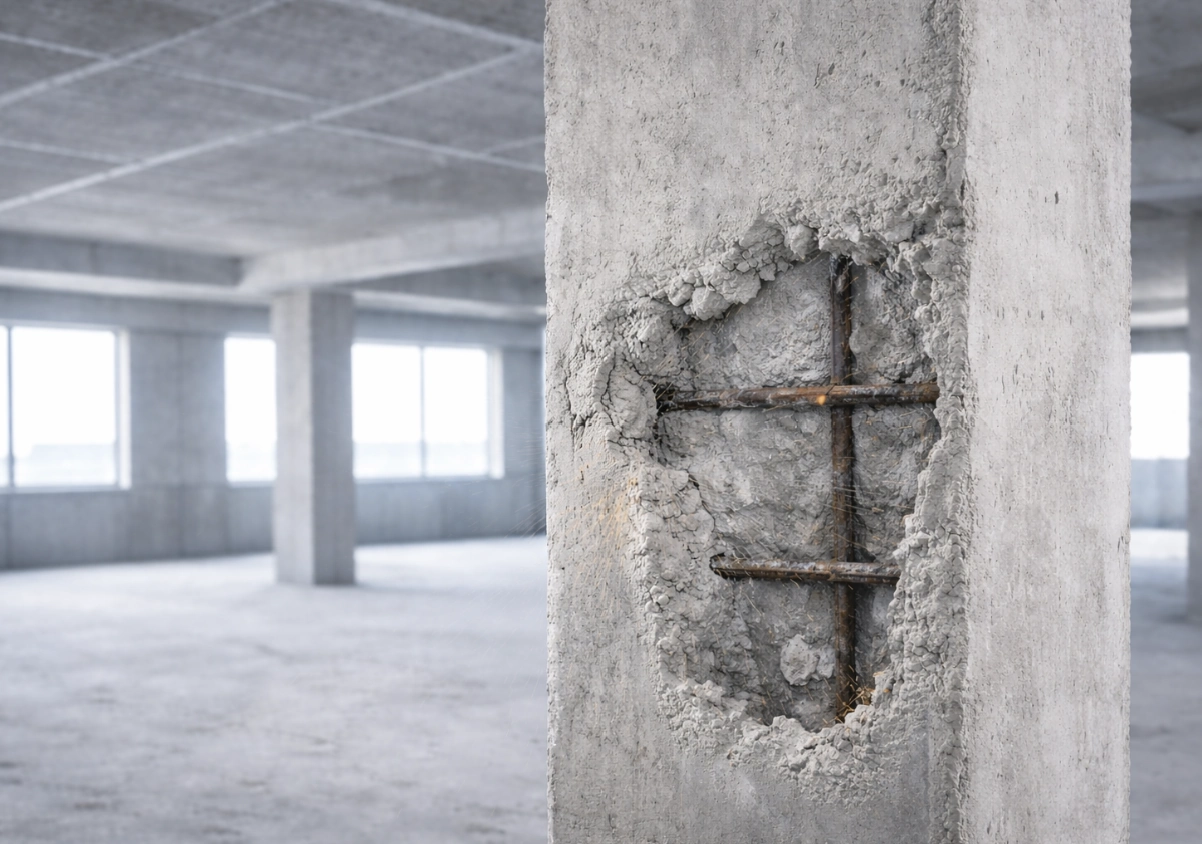
Chloride-Induced Corrosion Repairs
Where elevated chloride levels are present, repairs focus on removing contaminated concrete around reinforcement and reinstating using chloride-resistant repair systems. These works are often combined with protective measures such as corrosion inhibitors or surface treatments to reduce future chloride ingress and manage long-term corrosion risk.
Concrete Breakout and Patch Repairs
Localized damage, spalling, or defects are addressed through controlled concrete breakouts and patch repairs. Repairs are designed to restore structural integrity, provide adequate cover to reinforcement, and achieve compatibility with the surrounding concrete in terms of strength and durability.
Protective Coatings and Surface Treatments
Protective coatings and surface treatments are applied to reduce the ingress of carbon dioxide, chlorides, and moisture into concrete. These systems are used to extend the service life of both repaired and existing concrete and are selected based on exposure conditions, substrate condition, and performance requirements.
Sulphate Attack Repairs
Sulphate attack can lead to expansion, cracking, and loss of concrete integrity. Remedial works involve removal of affected concrete and replacement with sulphate-resistant repair materials suitable for the exposure conditions. Repair specifications are informed by laboratory testing to ensure long-term durability in aggressive environments.