Concrete Breakouts
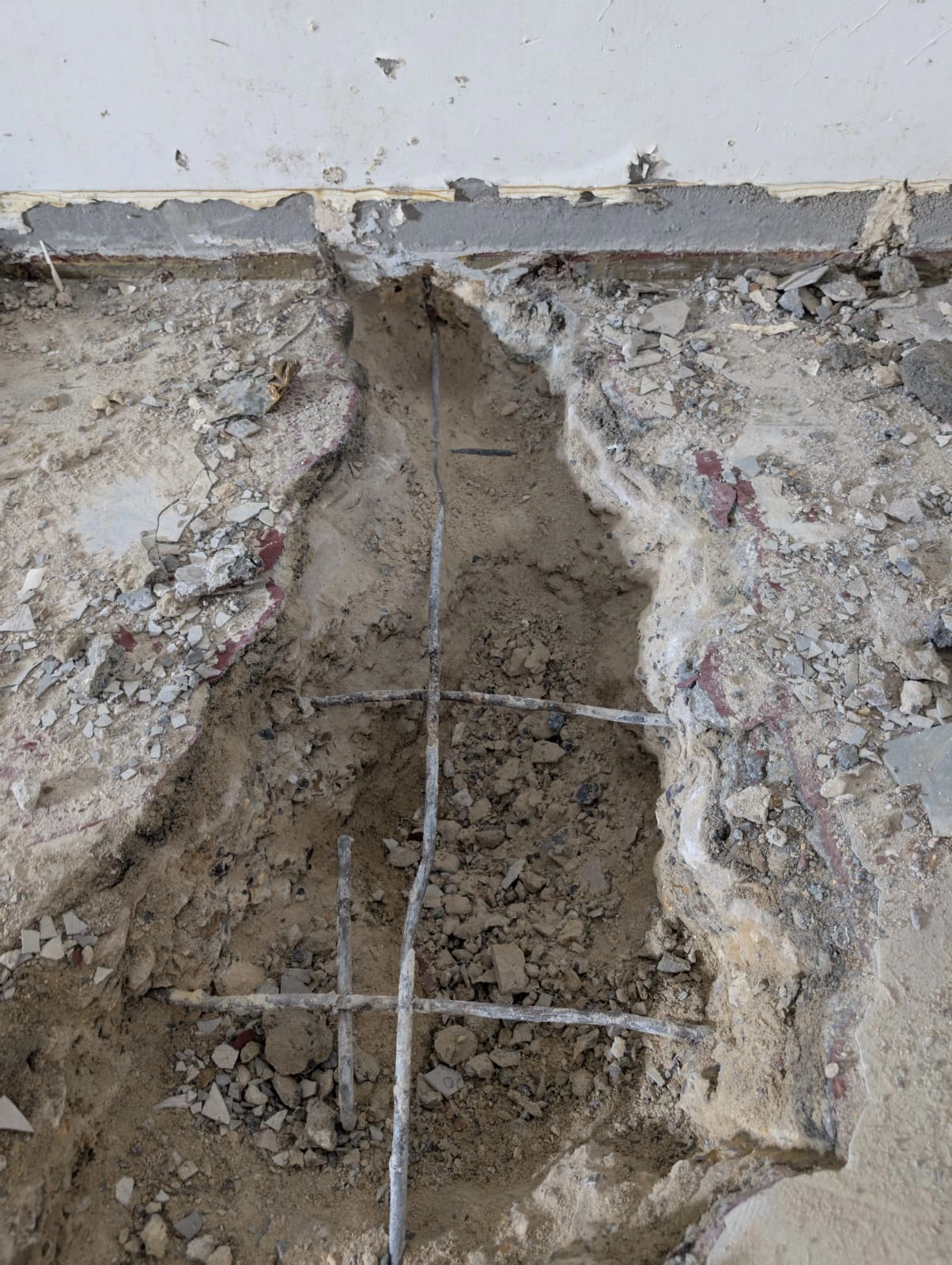
Concrete breakouts are undertaken to expose structural elements and confirm their as-built condition. This includes identifying reinforcement size, spacing, and type, confirming section depths, checking construction build-ups, and locating encased steelwork such as beams, columns, or connection details where drawings are unavailable or require verification. At Concrete Insight UK, breakouts are carried out using controlled mechanical breakers selected to suit the structure and access constraints. Works are planned to minimise unnecessary damage while achieving sufficient exposure for inspection, measurement, and photographic records. Exposed areas can be left open for further assessment or made good as required, providing clear, reliable information to support structural appraisal, design verification, or remedial works.
Concrete Coring
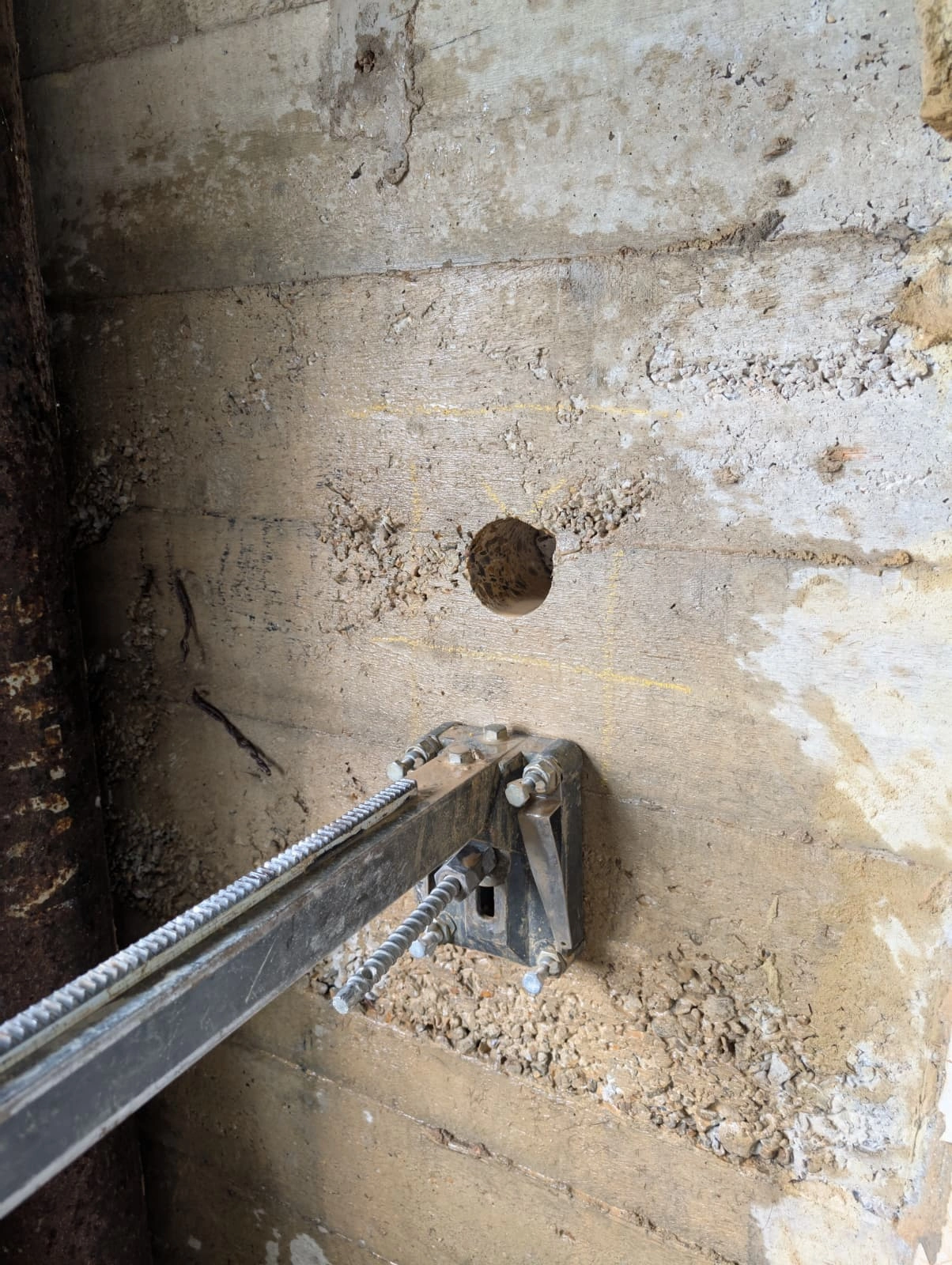
Concrete coring is a precision drilling technique used to remove clean, cylindrical samples from concrete structures. At Concrete Insight UK, we use diamond-tipped core drills with a variety of core sizes operated by experienced technicians to extract samples safely and efficiently. We carry out concrete coring when accurate, undamaged samples are required for laboratory testing - such as compressive strength analysis, carbonation profiling, chloride testing, or petrographic examination. Coring also allows for utility penetrations (for HVAC, mechanical or electrical services) with minimal disruption to surrounding material.
Dust Sampling
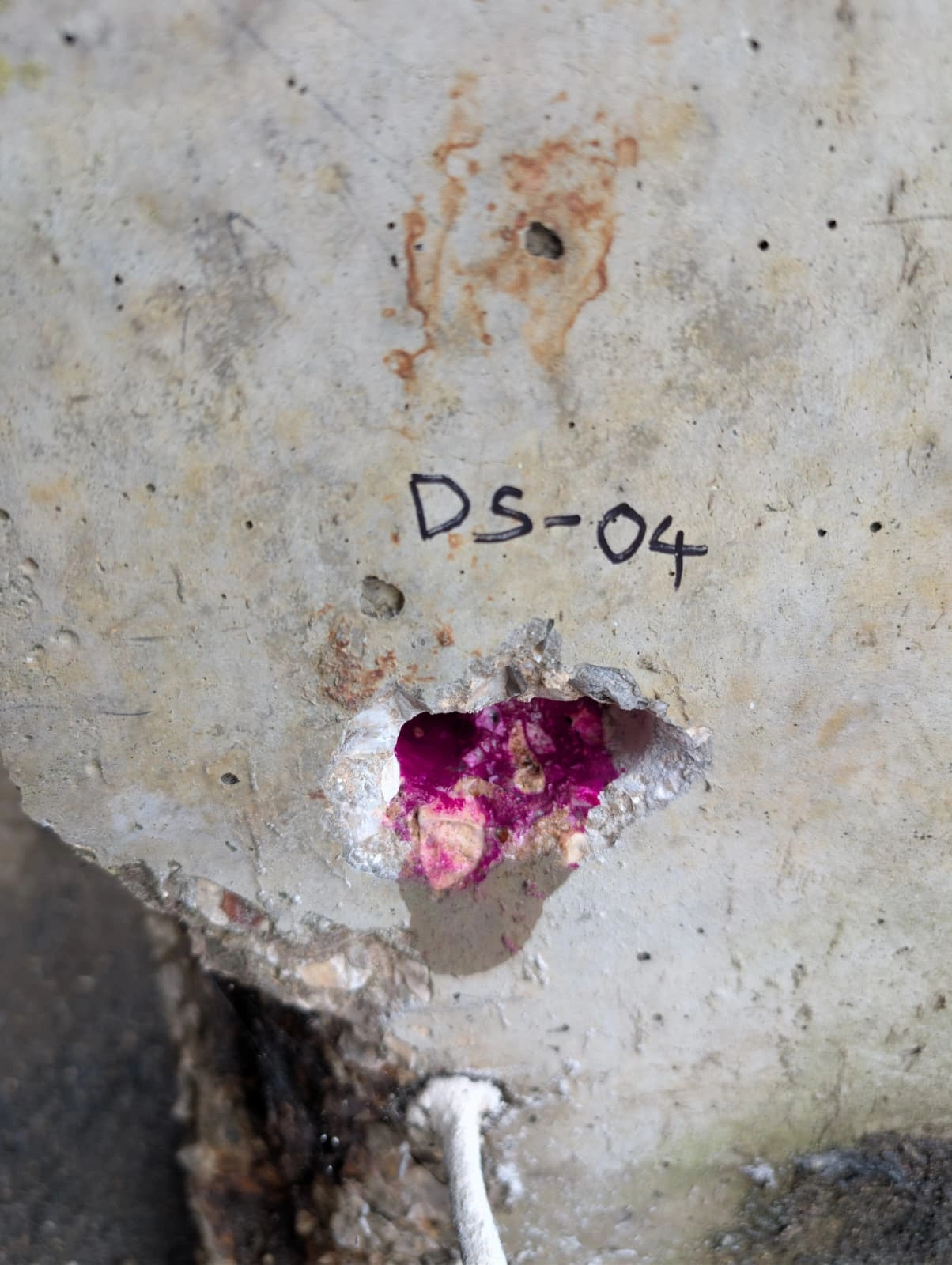
Concrete dust sampling is used to assess the chemical properties of concrete, including chloride content, cement content, alkali analysis etc. It provides critical data for evaluating corrosion risk, service life, and the need for remedial works, without the disruption of full-depth coring and exposure. Samples are collected by controlled rotary drilling at defined depths, allowing accurate profiling of contaminants relative to reinforcement level. All equipment is cleaned between locations to prevent cross-contamination, and samples are securely labelled and submitted to accredited laboratories for analysis, ensuring reliable and defensible results.
Half Cell Potential Surveys
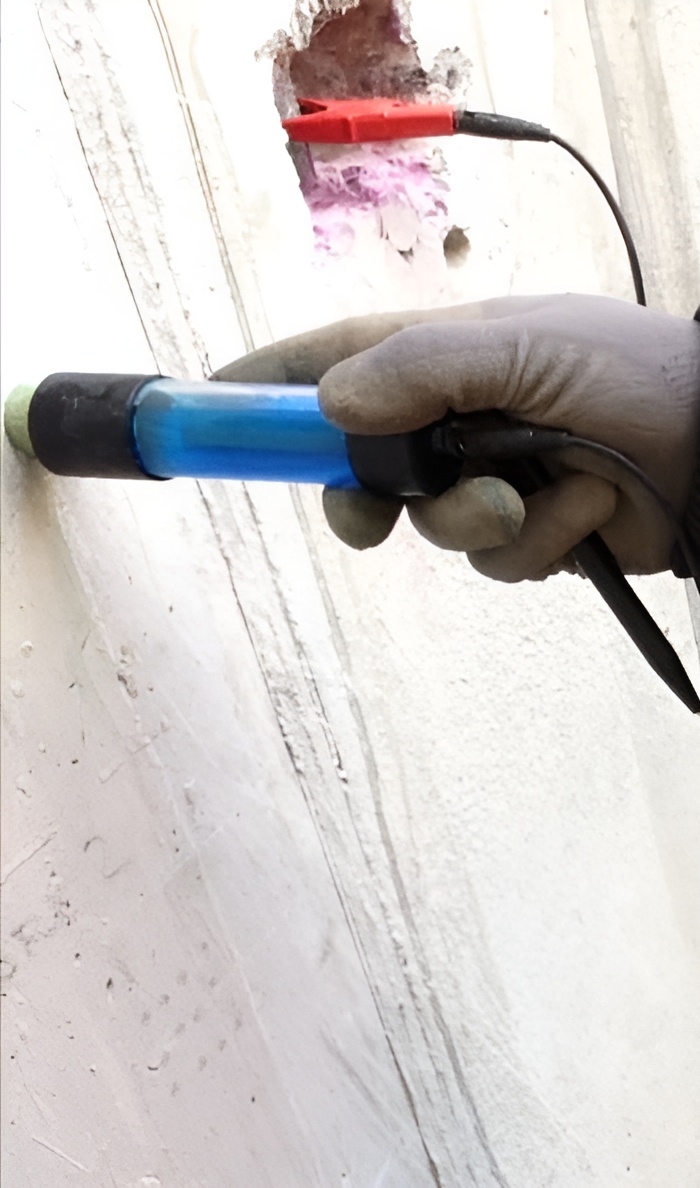
Half-cell potential surveys are used to assess the likelihood of corrosion occurring in reinforced concrete by measuring the electrical potential of embedded steel. The technique provides an indication of active corrosion risk, helping to identify areas where reinforcement may be deteriorating before visible damage occurs. At Concrete Insight UK, surveys are undertaken by establishing electrical continuity with the reinforcement and taking surface potential readings using calibrated half-cell electrodes. Results are plotted and interpreted in line with recognised standards to identify zones of low, uncertain, or high corrosion risk, supporting targeted investigations, repair planning, and long-term durability assessments.
Pull Testing
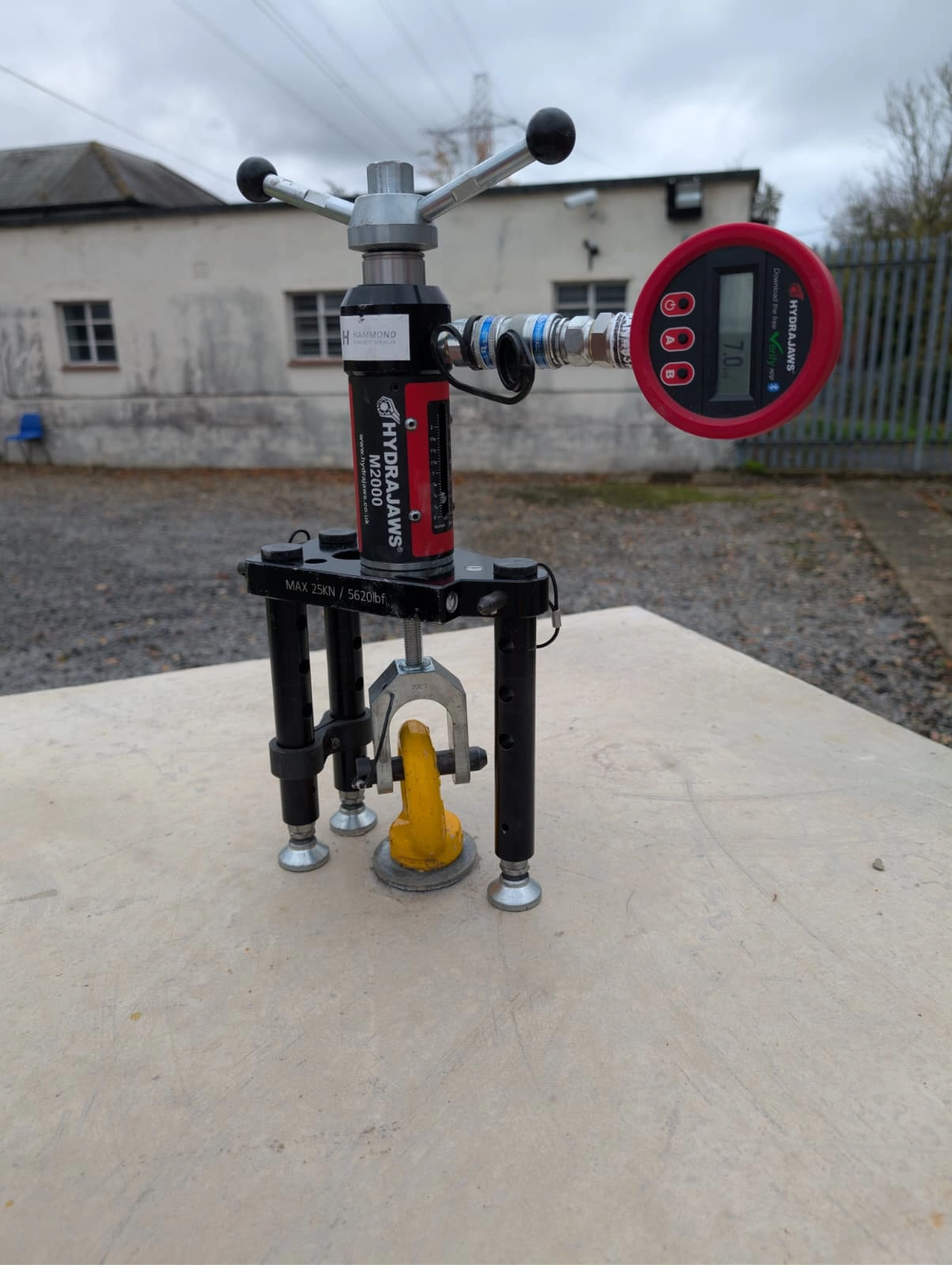
Pull testing is used to verify the in-situ strength and load capacity of fixings, anchors, and cast-in or post-installed connections within concrete and masonry. It provides direct confirmation of performance where design assumptions need validation, existing fixings are being assessed, or new loads are proposed. At Concrete Insight UK, pull tests are carried out using calibrated hydraulic pull-out equipment in accordance with recognised industry standards. Tests are performed to either a specified proof load or to failure, with load and displacement recorded throughout. Results are interpreted and clearly reported to confirm suitability, identify limitations, and support safe design decisions.