The slow drift of CO₂ into concrete
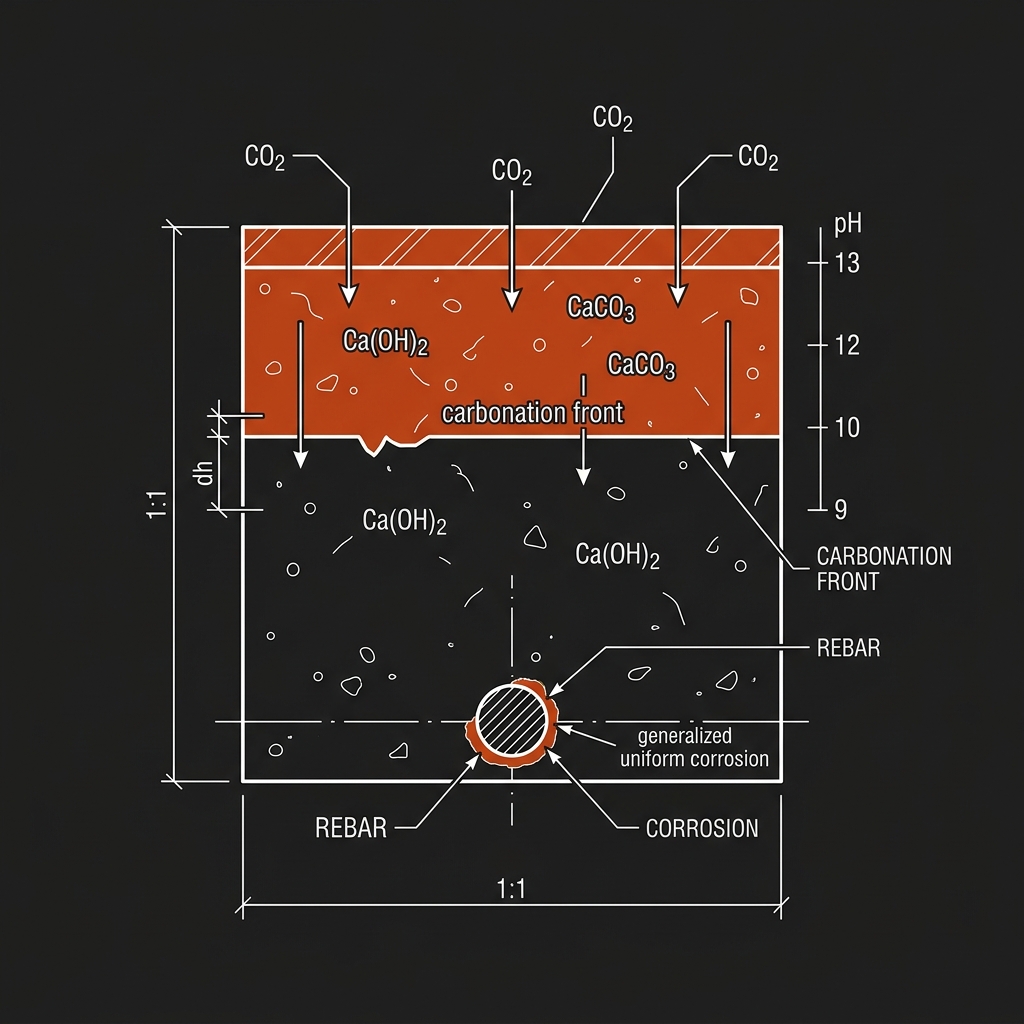
Atmospheric carbon dioxide reacts with the calcium hydroxide in concrete, converting it to calcium carbonate and dropping the pH from ~13 to below 9. Once the carbonation front reaches the reinforcement, the passive film is lost and generalised corrosion begins.
Where it comes from
- 01Age of the structure (carbonation depth grows with time)
- 02Low cover to reinforcement
- 03Porous or poorly compacted concrete
- 04Urban and industrial atmospheres with elevated CO₂
What you might see on site
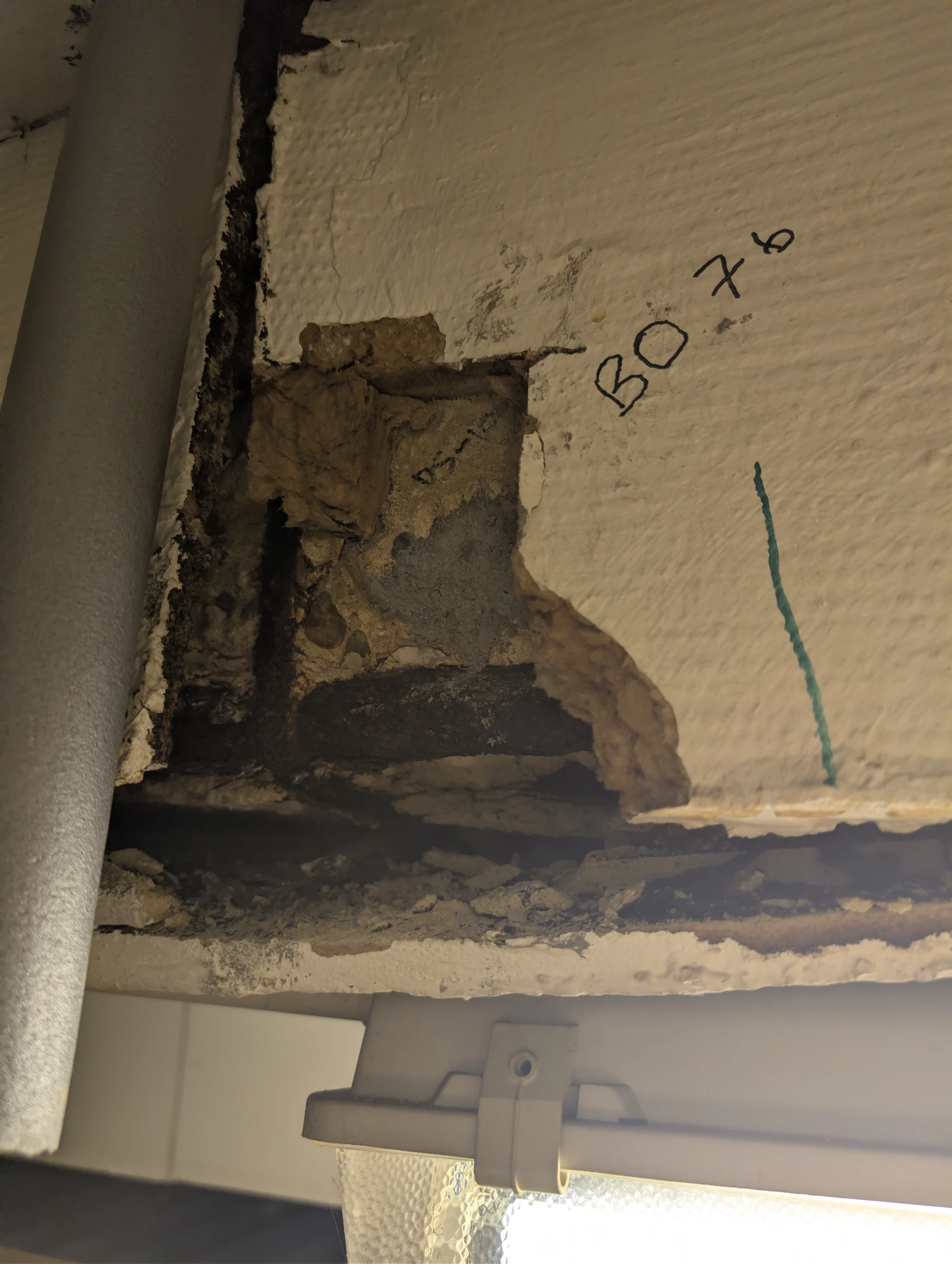
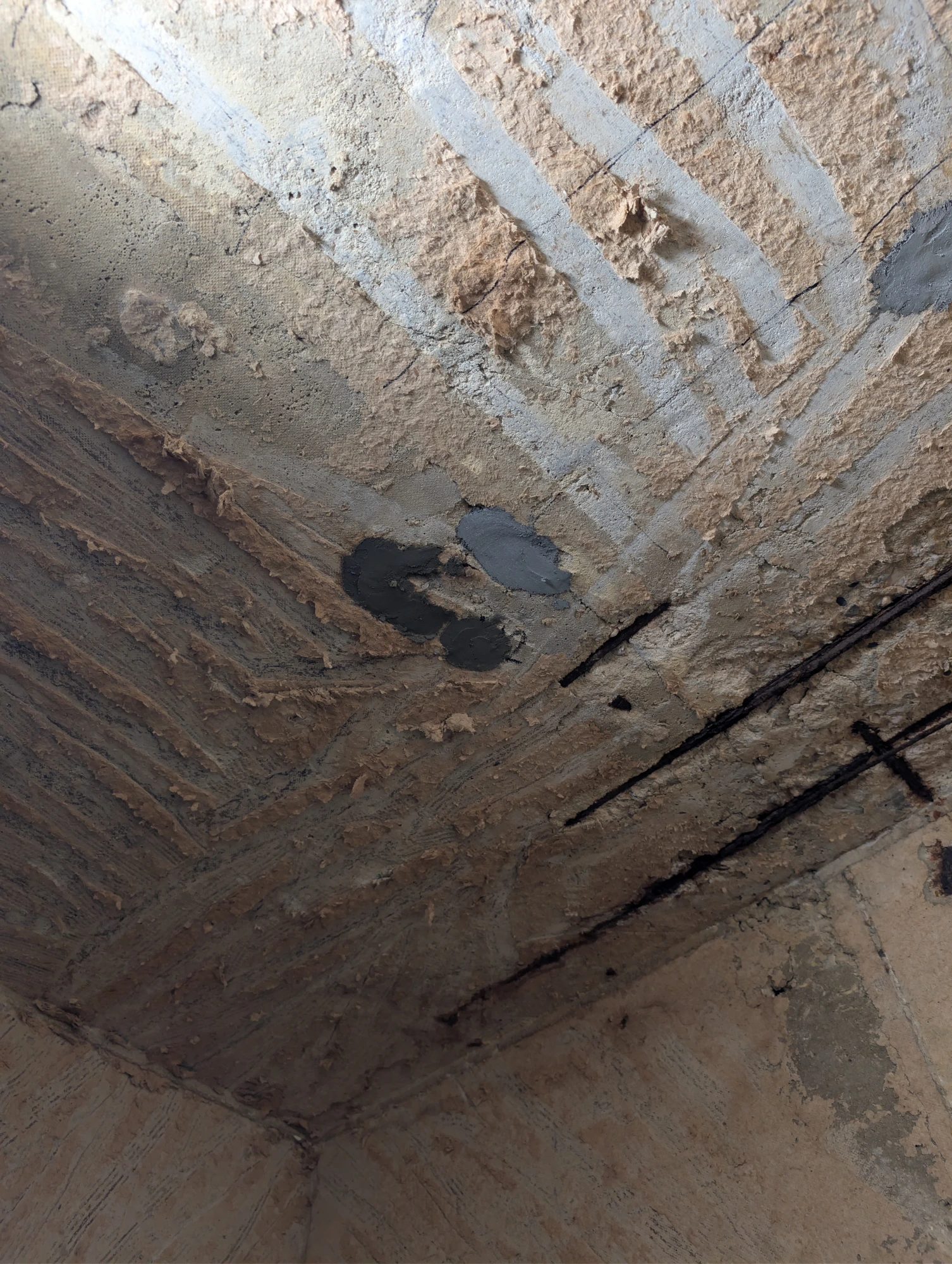
- Fine cracking along the line of reinforcement
- Uniform (not pitted) corrosion of embedded steel
- Rust staining bleeding through the surface
- Spalling of thin cover concrete
How we investigate
- T · 01pH indicator spray on freshly exposed concrete to measure the carbonation front
- T · 02Depth-of-cover surveys to compare cover to carbonation depth
- T · 03Petrographic analysis if the mix design is unknown
- T · 04Half-cell potential mapping
How we put it right
Where the carbonation front has reached the steel, affected concrete is broken out, reinforcement is cleaned and treated, and the element reinstated in a compliant repair mortar. Critically, an anti-carbonation coating (e.g. Dekguard S) is then applied to the whole element to arrest further CO₂ ingress and protect the cover zone from further deterioration.
Recommended Fosroc products

High-strength, fibre-reinforced hand-applied repair mortar

Single-component zinc-rich epoxy primer for exposed reinforcement

Protective coating against CO₂, chlorides and moisture